Acanthus leaves and running scrolls
James Page’s drawing guide first builds an upright acanthus leaf from proportions and guide lines, then carries its curves into more complex foliage. The selected pages follow both parts: the upright leaf’s construction and degree of finish, then a scroll composition, a curvilinear leaf, its outline and fold shadow, and its projection around a curved support. This is historical ornamental drawing, not a stone-cutting procedure or a measured memorial pattern.
For monument design, the useful question is where the ornament sits in relation to the lettering: does a stem frame a panel, turn around a corner, or belong on a rounded capital? The modern application below is an analogy from Page’s architectural drawing examples. For lettering hierarchy and panel space, see inscription design; for a parallel lesson in building a decorated initial and border, see illuminated initials and borders.
Build an upright leaf from a centerline
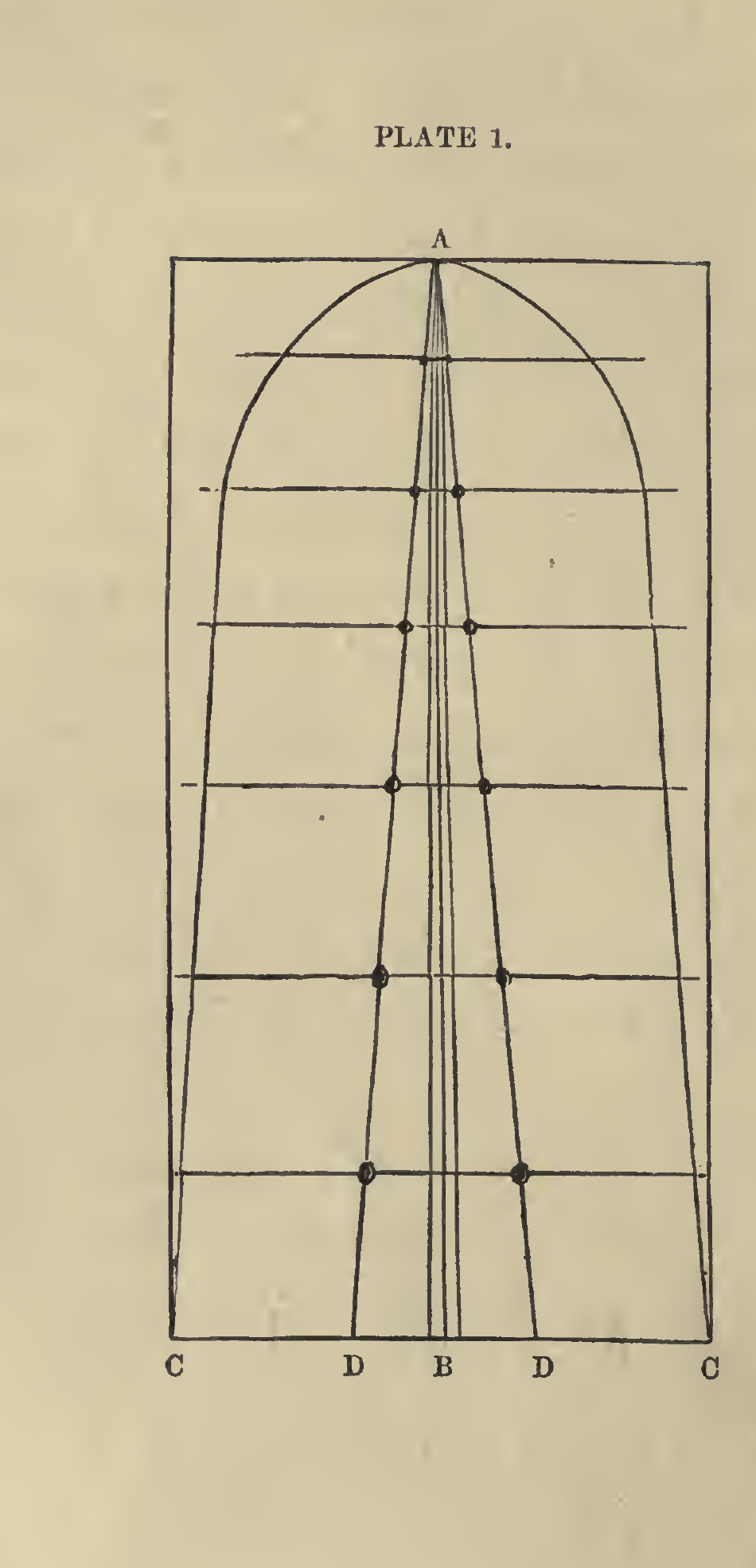
Section titled “Build an upright leaf from a centerline”Page’s first chapter, “History and Rules for Drawing the Acanthus Mollis, Perpendicularly,” treats the leaf as a centered structure. On printed p. 9 he proposes a base width of about half the height for the example, while allowing the proportions to vary with placement. He divides the base and vertical axis into guides before drawing the successive lobes. Plate 1 shows that framework: the middle axis and repeated cross-lines locate the leaf’s spread before its outside contour is refined. The ratio and divisions are a historical drawing example, not a required memorial dimension.
Choose the finish for the viewing distance
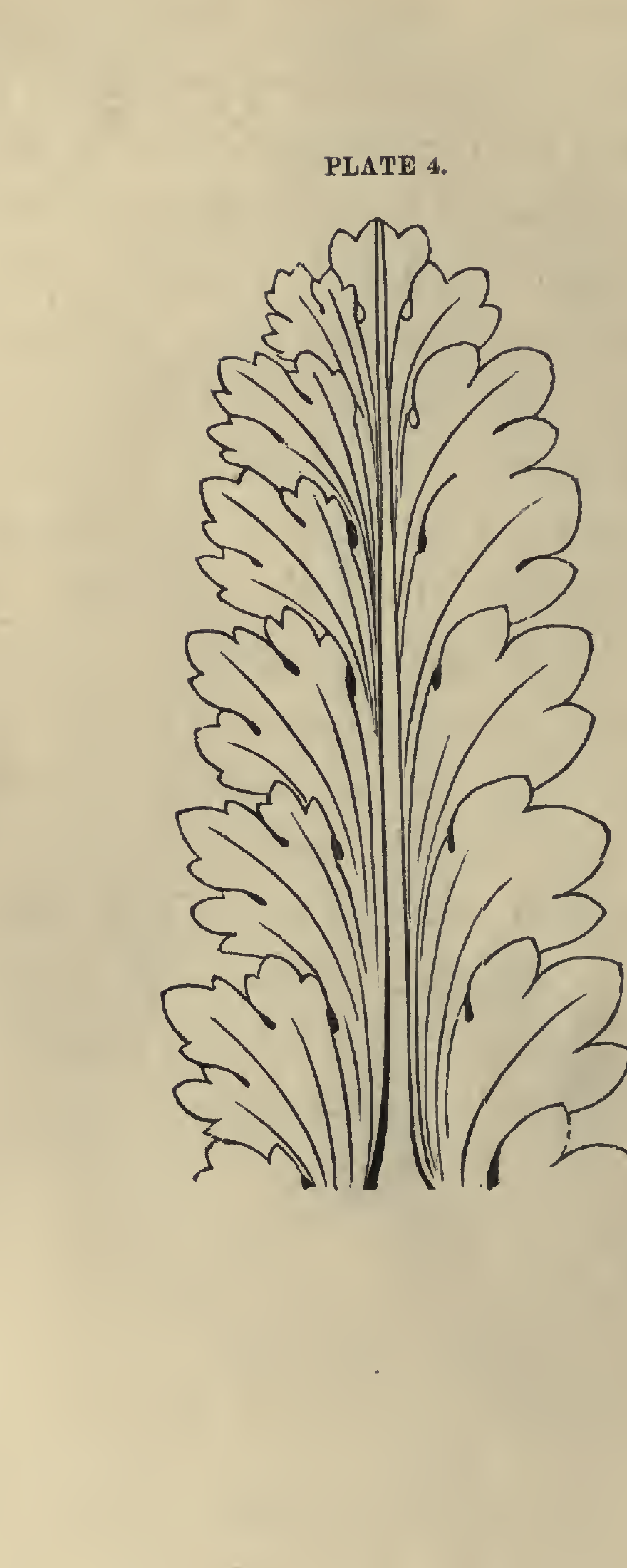
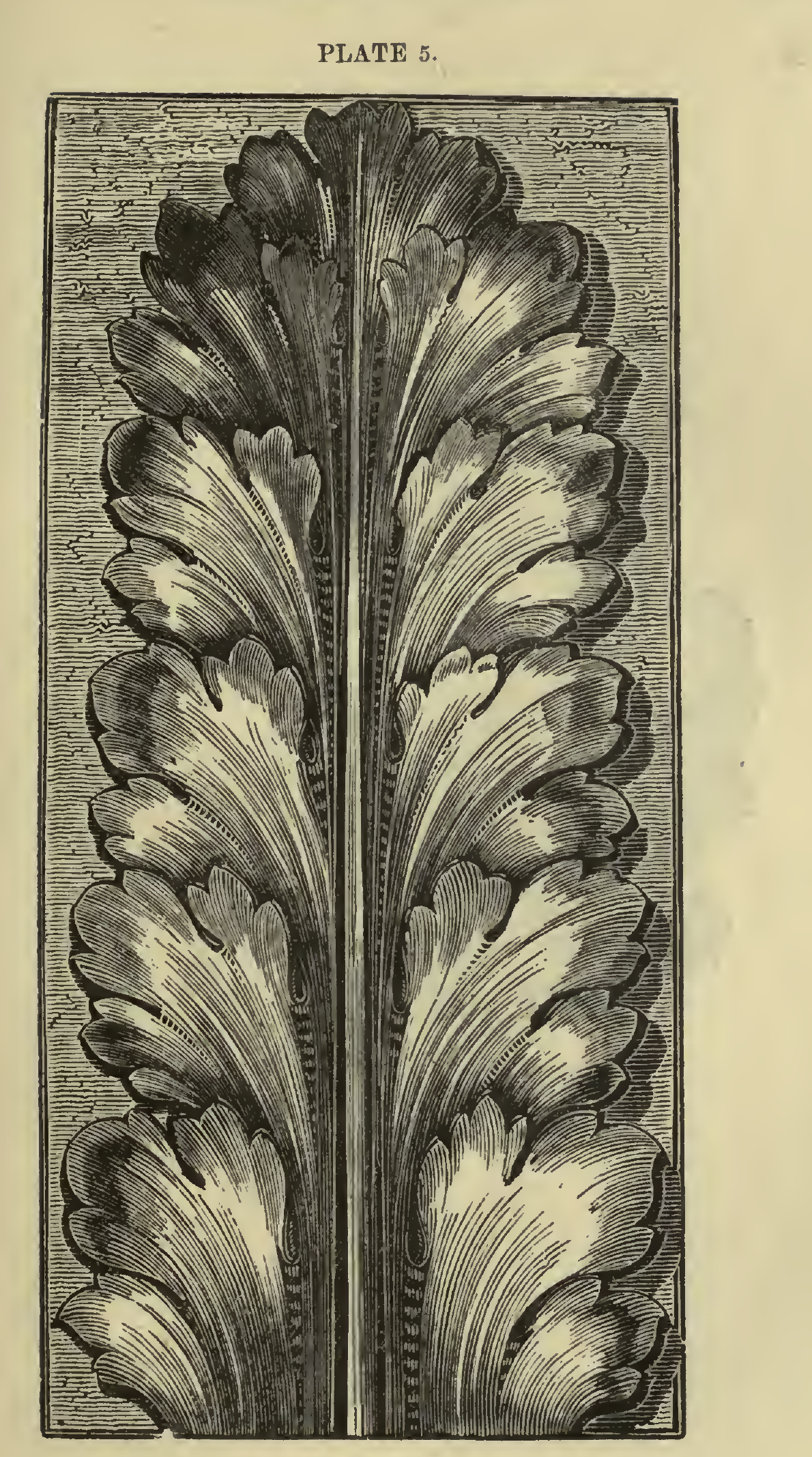
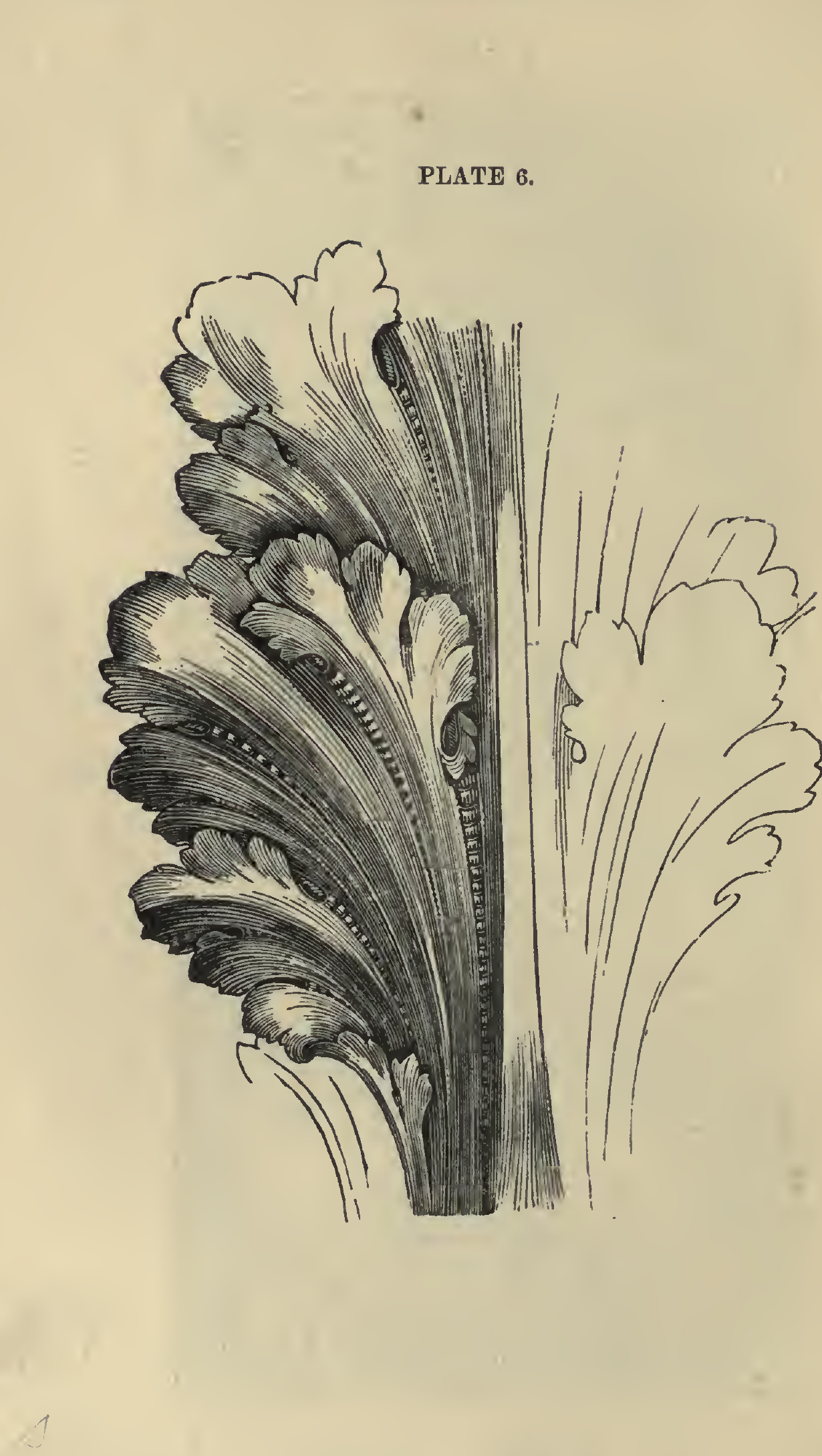
Section titled “Choose the finish for the viewing distance”Page’s next stages are not simply “more detail is better.” He warns that finely worked foliage can become a confused mass when it is placed high and seen from below. Plate 4 keeps a clear layered contour. He describes Plate 5’s tooth-shaped, or dentata, edge treatment as suitable for friezes, modillions, mouldings and elevated work, where distance reduces the visible detail. Plate 6 presents a richer leaf for work seen near the eye. These are Page’s historical drawing choices; their hatching does not specify carving depth or a modern material.
Try the distinction in a memorial sketch
Section titled “Try the distinction in a memorial sketch”As a present-day design exercise, draw the same small acanthus accent twice within the space left beside a memorial inscription: once as a strong outline with broad lobes, then with additional folds and shading. Review both at the intended viewing distance and alongside the words. Keep the version whose main leaf shape remains clear without pulling attention from the inscription. Page’s historical proportions and drawings are references for sketching, not a stone size, carving-depth or shop specification.
Follow the scroll before the leaves
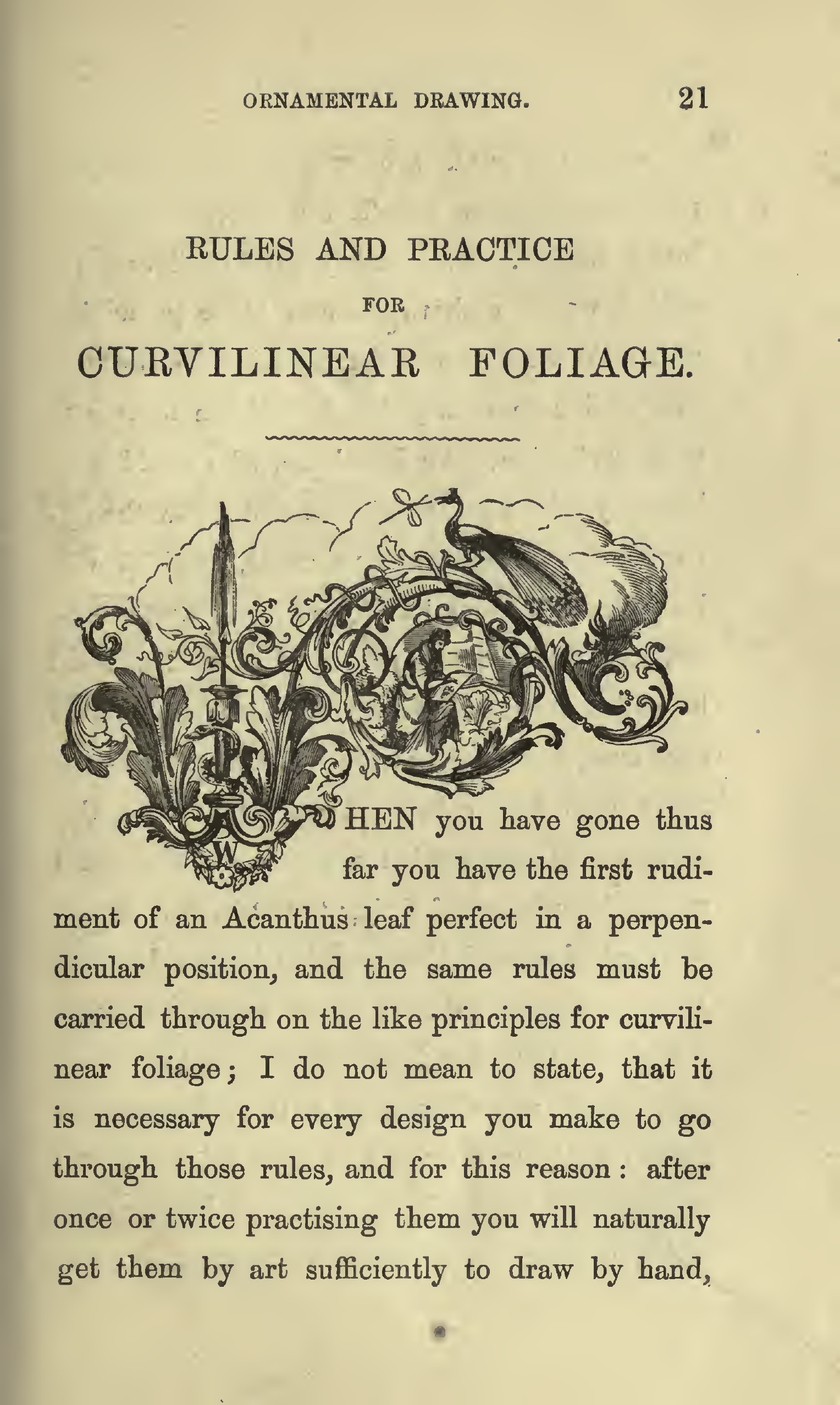
Section titled “Follow the scroll before the leaves”Page opens his chapter on curvilinear foliage with a dense composition of leaves and curling stems. Follow the long stem paths first; the leaves sit on those paths and turn the eye back into the design. In a memorial sketch, this helps separate the underlying flow from the smaller leaf lobes. It is a reading aid, not a claim that the historical composition was made for a cemetery monument.
Establish a leaf’s proportions
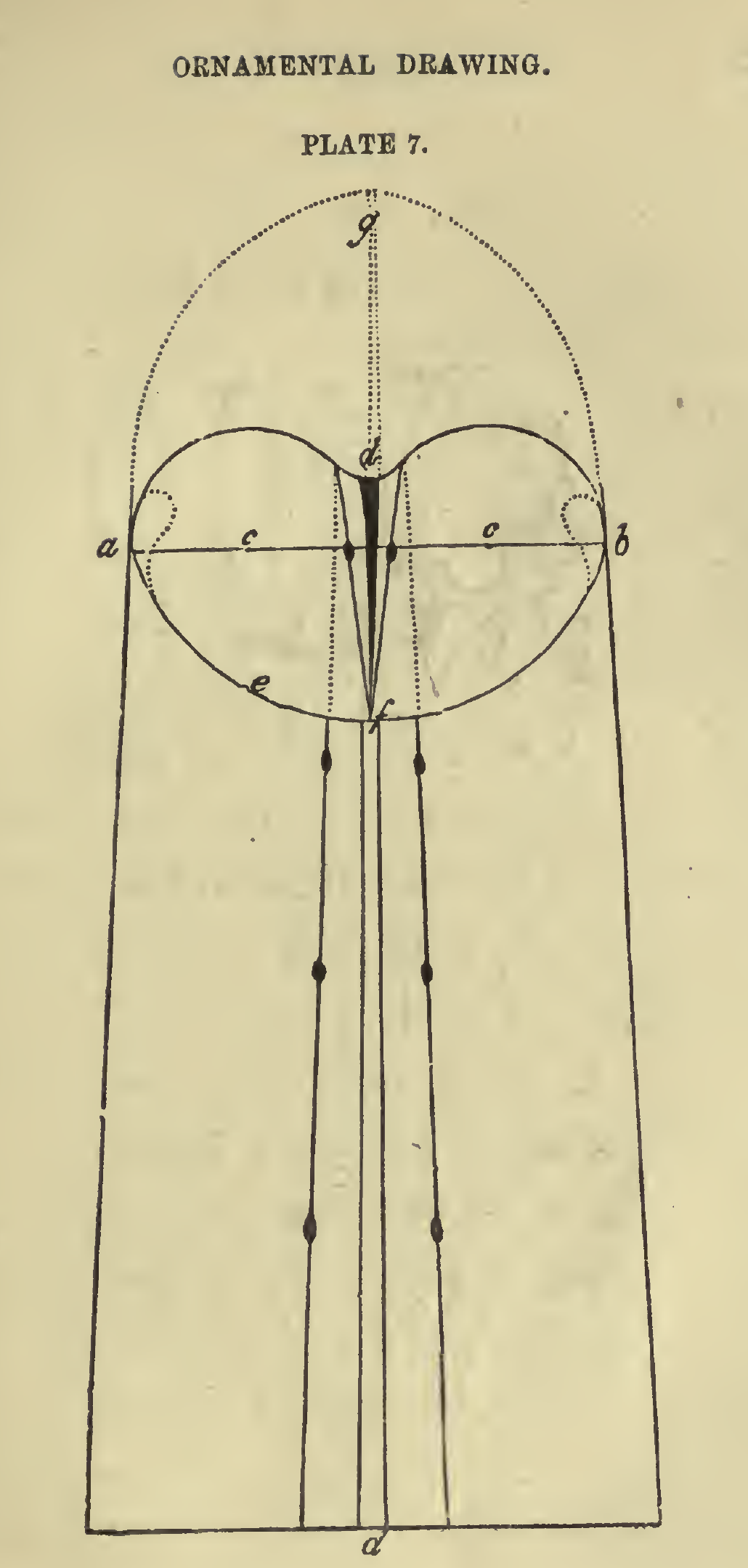
Section titled “Establish a leaf’s proportions”Plate 7 begins with a long centerline and a crosswise measure for the leaf’s widest point. Page uses circular arcs to place the upper lobes, then joins them to the lower outline and the narrowing central stem. The drawing leaves its construction lines visible, so a beginner can see that the outline is organized around a few large curves rather than assembled from many unrelated curls.
Read the outline as a sequence
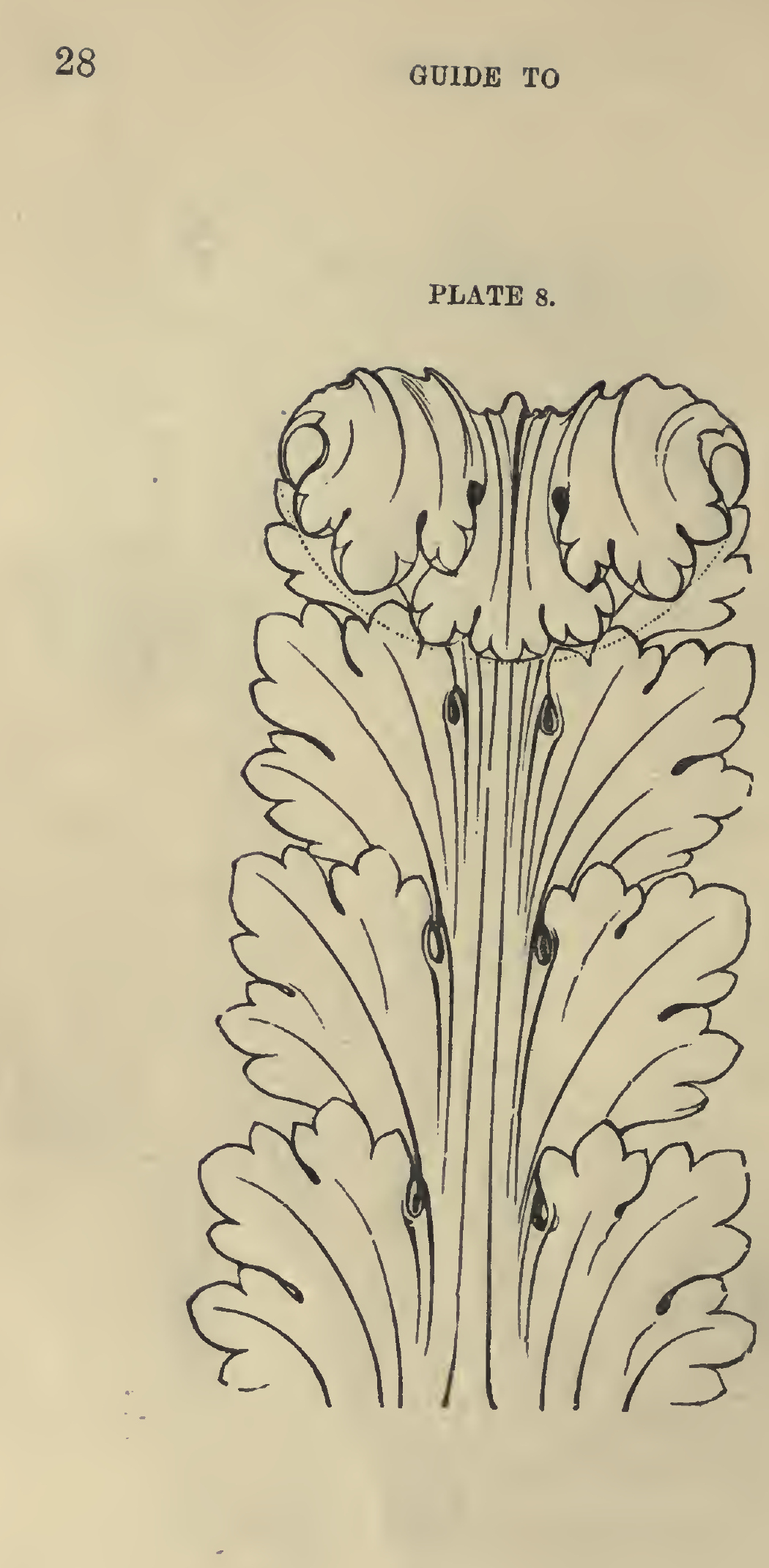
Section titled “Read the outline as a sequence”Plate 8 carries the guide into a complete line drawing. Notice how the central rib remains legible while each side leaf opens away from it; the repeated lobes change direction as they rise. Read the forms from the center outward, then follow each lobe back to its attachment. This reveals the leaf’s rhythm without mistaking every contour for a separate scroll.
Let the fold determine the shadow
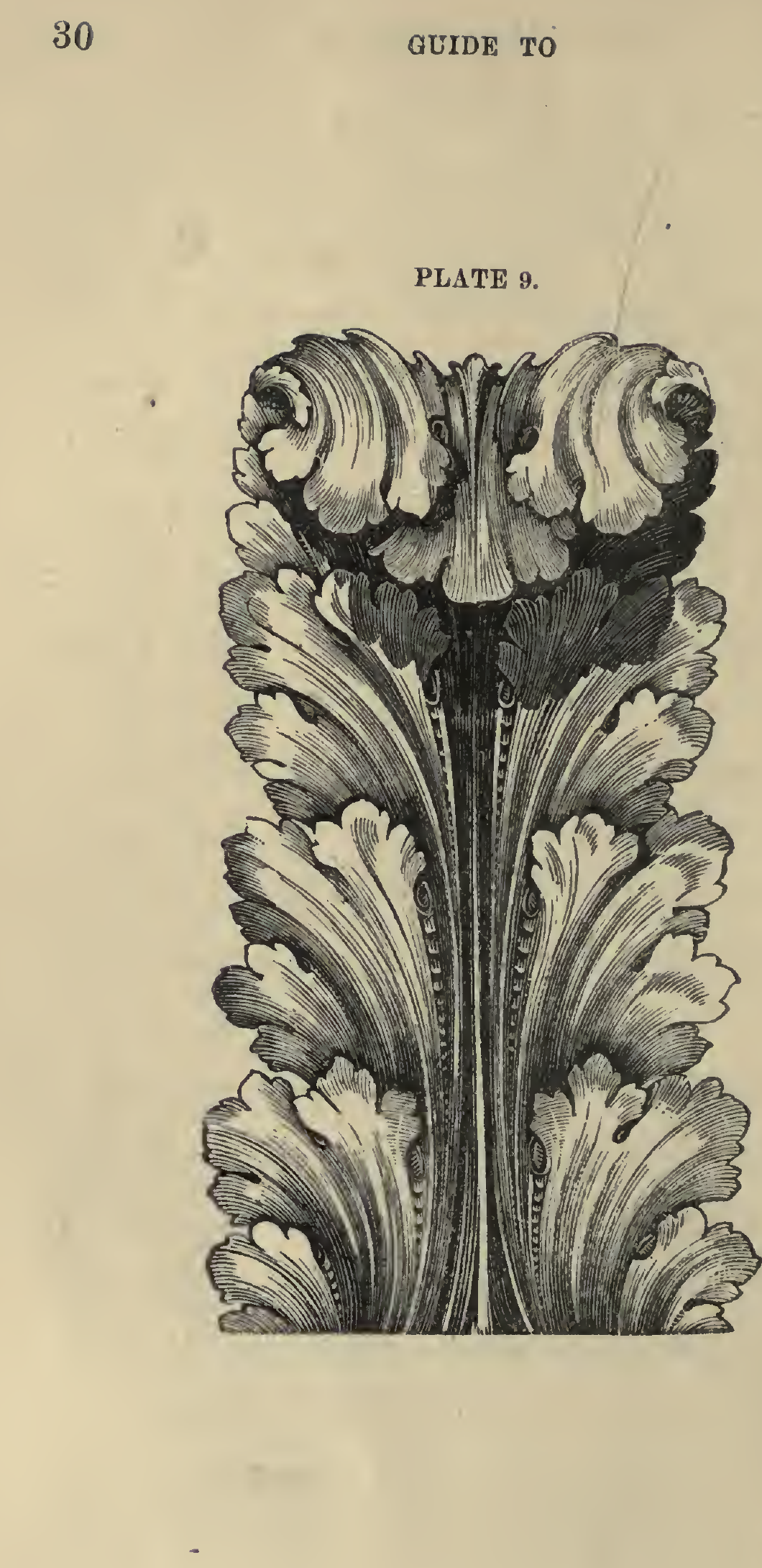
Section titled “Let the fold determine the shadow”Page warns that a shallow or deep bend should change the shadow. Plate 9 makes that point visible: parallel hatch marks follow the folded lobes, while darker passages sit behind overlaps and near the central recess. Compare it with Plate 8. The outline is related, but the shadow turns the leaf from a flat contour into a form with depth.
Fit the motif to its support
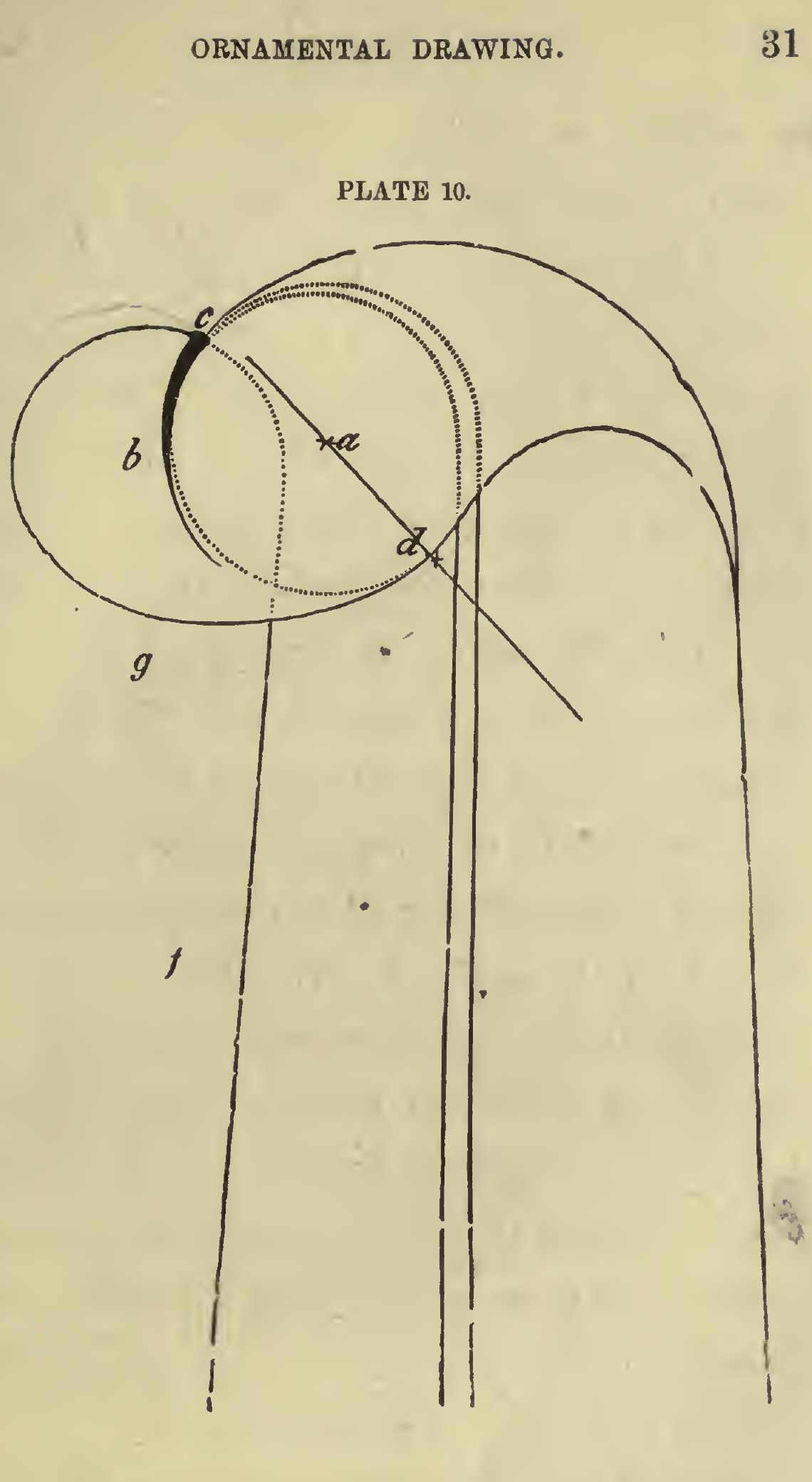
Section titled “Fit the motif to its support”Page next turns the folded leaf into perspective around a curved architectural member, explaining that the method can be used around a Corinthian or Composite capital. Plate 10 is a construction diagram, not a finished capital: its arcs and guide lines show how the leaf’s head turns around the rounded form. This is the clearest connection to a column or capital on a memorial.
When adapting the idea to a flat memorial panel, keep the distinction clear. A panel border follows the panel’s plane and margin; a leaf wrapped around a round support changes direction in perspective. In either case, establish the support and lettering field first, then let the foliage occupy the remaining space. That is a modern design application of Page’s drawing lesson, not a direction to carve the displayed lines into stone.
Use the drawing as a design study
Section titled “Use the drawing as a design study”For a memorial sketch, borrow the sequence rather than copying a plate as a finished pattern:
- Decide whether the ornament belongs to a flat panel edge, a corner or a rounded capital.
- Draw the main stem or support path before adding leaves.
- Set the leaf’s centerline and broad proportions; then connect the lobes to that structure.
- Use folds and overlap to explain depth in the drawing, while keeping lettering and its clear space readable.
Page’s book teaches ornamental drawing. It does not specify stone, carving depth, tooling, lettering clearances or a safe modern shop process. Use current professional judgment and qualified sources for those decisions.
Source and editorial credit
Section titled “Source and editorial credit”James Page, Guide for Drawing the Acanthus, and Every Description of Ornamental Foliage, London: Bernard Quaritch, re-printed 1886. The physical title leaf identifies the reprint and publisher; the Archive catalog identifies the creator as James Page. This article uses the first chapter on printed pp. 9-10 and 15-20 (Archive PDF pp. 33-34 and 41-46), then the curvilinear-foliage chapter on printed pp. 21 and 27-31 (PDF pp. 49 and 55-59) of the exact downloaded Archive PDF. The Archive item metadata reports no visible copyright notice and possible status NOT_IN_COPYRIGHT for the United States; this is U.S.-specific catalog evidence, not a worldwide rights determination. See the Page source record.
These figures reproduce selected material from the source scan without changing the historical drawing. Page 21 is shown as a full selected page because the engraving is integrated with its surrounding text. Plates 1, 4-10 are shown as selected crops, each with a separate optimized display copy. Separate display copies are resized derivatives; a full-resolution PNG is linked from each figure. The entire source PDF is retained in private review storage and is not bundled with the wiki.